| |
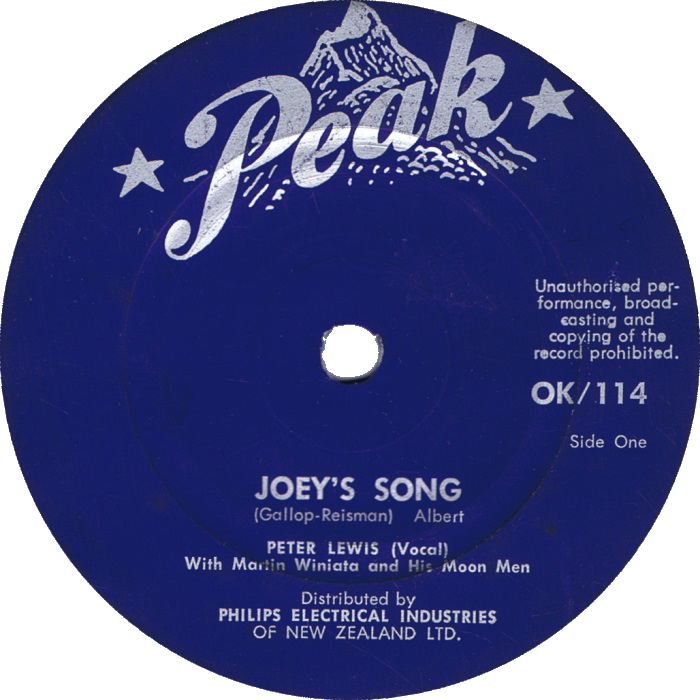
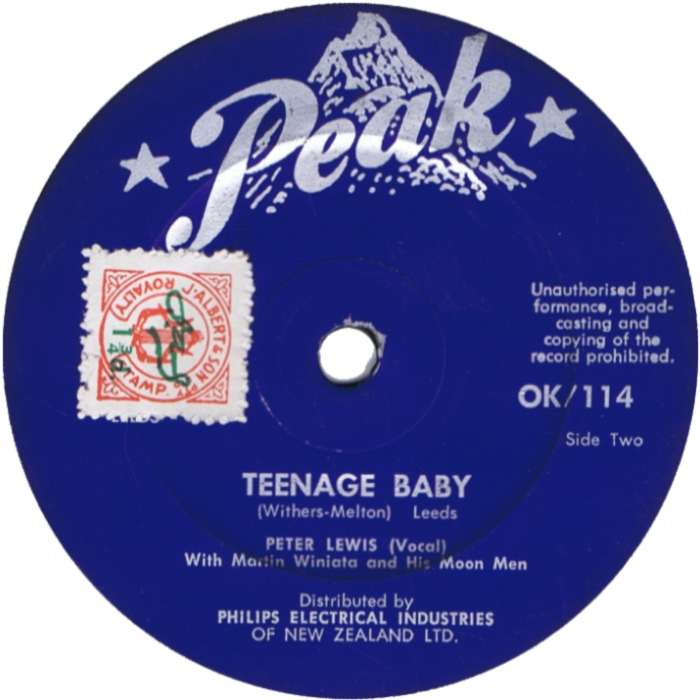
Peter McMullan — Peak recording artist using the stage name of Peter Lewis .....
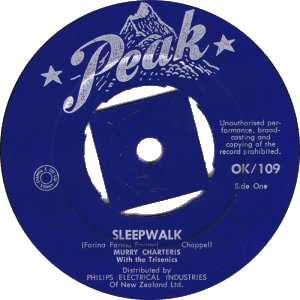
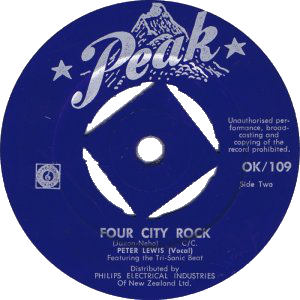
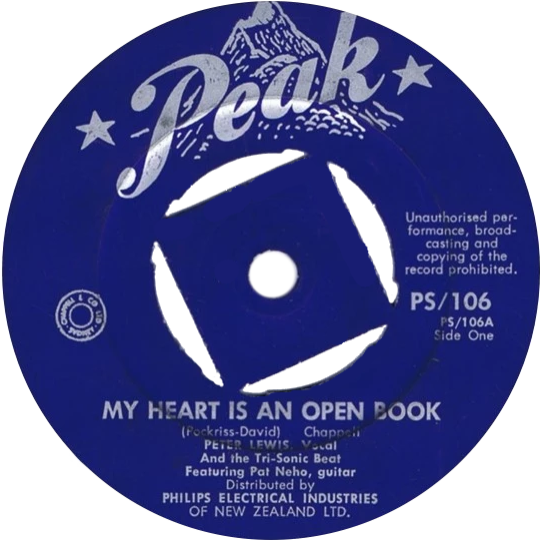
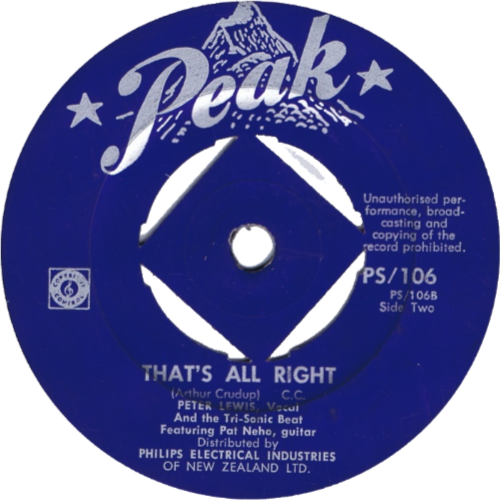
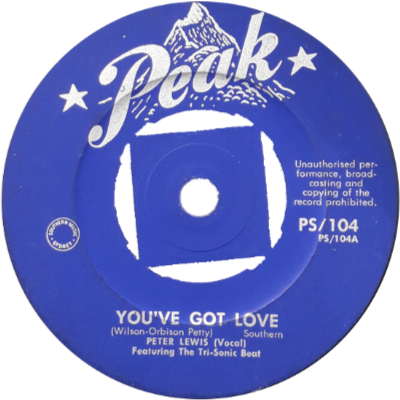
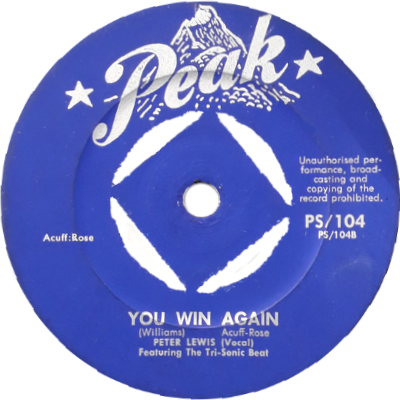
The Trisonic Beat was the house band for the Christchurch, New Zealand Peak label. Active in the late 1950's and early 1960's and was fronted by Peter Lewis on vocals with Pat (Rongo)Nehoneho on guitar, Johnny "Spiro" Philpott on drums, and Ray Kamo on bass guitar. The band is best known for its single, Four City Rock released in 1959, written by label owner Jack Urlwin and including guitarist Pat Nehoneho who had added a driving beat. The session also included bassist Ray Kamo, and drummer Johnny (Spiro) Philpott. The song was an inclusive call to people around New Zealand, naming the country's four main cities. Other recordings by the band included the 1959 released single with the songs My Heart Is An Open Book // That's All Right, followed by You've Got Love // You Win Again. After Peter Lewis left, he was replaced by (Super) Cyril Edwards and the group eventually evolved into The Saints before disbanding in 1962.
The following narrative is from Graham Reid (Elsewhere).....
Outside of folk songs (e.g. this droll trip around the country), New Zealand has had no great history of name-checking local places in rock music, but back in 1959 Jack Urlwin of the Christchurch record label Peak scribbled down some words and handed them to young singer Peter Lewis and his guitarist Pat Nehoneho. The scribble didn't have a title but they were words to a song which name-checked Auckland (the Queen City with its then-new harbour bridge), Wellington (the Windy City that looks out on Cook's Strait), Christchurch (The Garden City) and Dunedin in the south. Lewis and Nehoneho didn't much rate the thing, but Urlwin was insistent so Pat, who was band leader of the Trisonic, put the lyrics to a driving beat, and they nailed the recording on the second take. As with Dancing In The Street, this is an inclusive call to people around the country where they are "rocking in the milk bars and rocking in the halls". It linked the separate cities in song . . . although Urlwin did manage to rhyme Dunedin and freezin'". Whatever, it is a great slice of Kiwi rock'n'roll which, as Lewis later noted, succeeded because good rock and roll is simple and uncomplicated so it reaches everybody. This reached out to the four main cities . . . but doubtless also called to the quiet rural towns and held out the notion that, in 1959 when this was released, things were really going off in the big smoke.
| |


 ·
· Last Name