| |
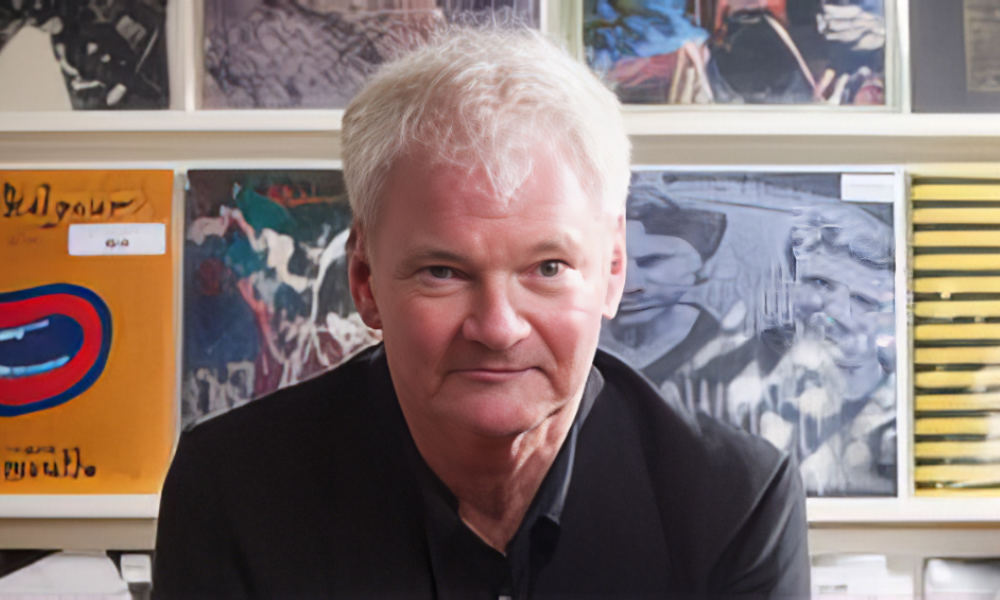
Flying Nun Records "Anything could happen and it could be right now, and the choice is yours to make it worthwhile," belted The Clean in their hit for Flying Nun Records Anything Could Happen. The Dunedin band, with their oblique lyrics and swirling guitars a la Velvet Underground, are a quintessential example of the Flying Nun Sound, a label that young record-shop manager Roger Shepherd capitalised 35 years ago in Christchurch with a measly $300.00 Named after another song written by The Clean, I'm in Love with These Times, Shepherd's memoir In Love with These Times: My Life with Flying Nun Records is a personalised account of his time establishing one of New Zealand's and the world's most beloved independent record labels. A gig by The Pin Group started it all - in Christchurch. Their performance inspired the release of the first Flying Nun record; a Pin Group 7". A disregard for traditional sounds and an alternative approach to performance and recording defined the label's records from up-and-coming young bands, most of them to critical acclaim: the psychedelically romantic Chills, the heavy Scorched Earth Policy, the pastoral folk of the Able Tasmans and the epic guitar rock of the Straitjacket Fits to name but a few.
Shepherd recalls being a shy, bookish young man who loved live music. He ran the label outside of his record shop job from his spare room at home. Nothing prepared him for the stress of running a small company that quickly turned from being the underdog - a small ragtag local outfit - to a million dollar business. Self-medication with alcohol (whisky and ginger ale being his drink of choice) permeates the book - a habit that helped him relax but one he had to overcome when he was diagnosed with manic depression. The book is full of hedonic snapshots: playing crazed drunken cricket while at Sweetwaters, a member from the legendary British group The Fall punching Chris Knox in the early 1980s, and how the cheap thrills of drink, drugs and sex came to counter his obsessions at the local record shop.
Shepherd never played an instrument so he channelled his passion by archiving what he heard. "Yeah, I'm not a musician and I'm not particularly analytical. What got me excited was good songs. Good songs were important and the music came first. Rather than it being a commercial idea, I just wanted to document it. I was a fan so I had the ultimate fan's dream, somehow insinuating myself into the centre of it all," he laughs. "And then gradually I got driven by excitement, like any fan. You get sucked into it and want to see the development of the bands. "I think punk gave us the idea that we could all form bands and learn on the hoof. But some of us got left behind and didn't learn instruments. I just recognised a gap. I was working in a record shop and I could tell that these bands were beginning to come through and it was all changing." So, the label's popularity slowly but steadily grew with an expanding artist roster and increasing sales at home, then overseas.
The label moved out of his home into a derelict office space on Christchurch's Hereford Street where holes in the wall were covered with bits of cardboard (where plaster had fallen off), creating a permanent sheet of dust, or a very fine white powder, he dryly comments in the book. He also writes about regionalism. It was the early 80s post-punk era and innovative sounds were not only emerging from big cities like London, but from Glasgow, Sheffield, Manchester, Ohio and Cleveland. Flying Nun groups in Christchurch and Dunedin were soon to join this movement. After years of New Zealand pub rock groups like Hello Sailor and Dragon, an edgier, more original sound was developing and it differed from one city to the next.
Dunedin was still very much different to Christchurch. The people were listening to different records. I remember the 13th Floor Elevators were huge in Christchurch, but nobody had their records. You had to drive across town and go to someone's house just to listen to the record, Shepherd says.
But there was no such thing as the mythical Dunedin sound, Shepherd notes, rather it was more like many Dunedin sounds. The only thing the groups really had in common was that they shared Dunedin as a home. And everybody had big record collections — records that took months to get here. Shepherd doubts the label could have happened in Auckland. "Yeah, Auckland was too close to the rest of the world and more alert to overseas fashion, even in the 80s. I was conscious of how it was more connected to the world and I think the music in Auckland reflected that." Shepherd released 24 records in one year when the label took off. Working to a find-out-by-doing-it ethos, there was a huge element of ignorance, he says. "We were all quite mad. It was just enthusiasm. Working in retail, I took notice of what people were interested in and what they were buying so I had an inkling of the potential. But I had no idea where it would all go. Which was to the centre of the beast," he laughs. "I just found out how to do it by making mistakes - it's like learning to drive around London. You can have the map but you've gotta make the wrong turn and get lost every day. And then you'll learn the right way. We had a slack attitude towards money. And it was all manual accounting! There weren't computer programmes to do it for you. So you kind of had no idea what was going on. You did your accounts annually. It was hopeless." What they lacked in financial nous, Shepherd and his roster of bands made up for in community spirit. He was a hands-on no-frills record label owner, working in the office and in the warehouse, even gluing together record sleeves. Meanwhile the bands were creating no-frills music by creating their unfamiliar sounds on no-brand equipment. And with their jeans-and-jersey uniforms, the performers looked the same as their audience. There was a community spirit. People would lend gear to each other, they'd go to each other's gigs and design each other's posters. It all lasted as long as it did because people didn't really see each other as competition and wanted each other to succeed," says Shepherd.
Festival Records bought a 50 per cent stake in Flying Nun Records in 1990. In 2000, the label merged with Mushroom Records. After the business was bought by the Warner Music Group in 2006, Shepherd bought it back in 2009. Four years ago, the label moved to Auckland where it is overseen by Ben Howe and Matthew Davis. Shepherd remains involved as a company director. Now in his fifties, Shepherd lives a more sedate life in Wellington with his lawyer wife Catherine and their two daughters. Shepherd has to think when asked what he would have ended up doing if he hadn't started Flying Nun. "I would have been bad with authority and bad at taking directions. I think I might have done something slightly artistic like design. But I never got even remotely close to starting that road." Shepherd was determined that In Love with These Times not simply be a plotted history of the label. I actively swerved away from that. I was always aware it was going to be my story and a personalised account of what happened. This is the book I needed to write." Back in the 80s he thought, "no one was going to get rich, but some great records would get made". He was right. |
|


 ·
· Last Name